
Toilet Buying Guide
02/06/2026
Category : Buying Guides

Toilet Height
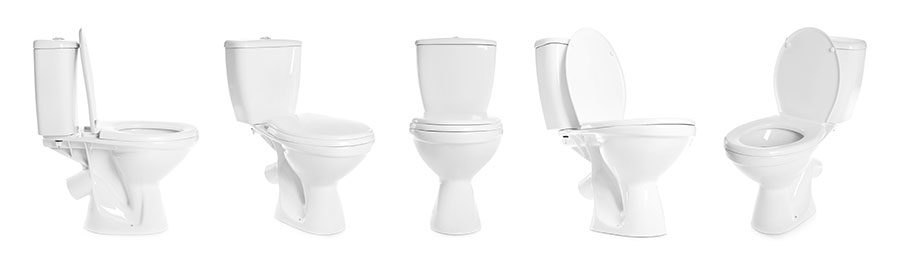
Toilet height is important to discuss when choosing a toilet.
Comfort Height toilets feature bowls that are 17" to 19" tall. A taller toilet bowl is typically more comfortable and makes it easier for someone to sit down and stand up from the toilet.
Standard Height toilets feature bowls that are typically around 14-1/2" tall.
Americans with Disabilities Act (ADA) compliant toilets can range in height and are referred to by different names by different vendors.
Toilet Shape
Toilet Bowls come with either an elongated or round front.
Elongated bowls are oval shaped and extends several inches past the front of the toilet. These are typically thought of as more comfortable.
Round front bowls are typically used in smaller bathrooms to save space.
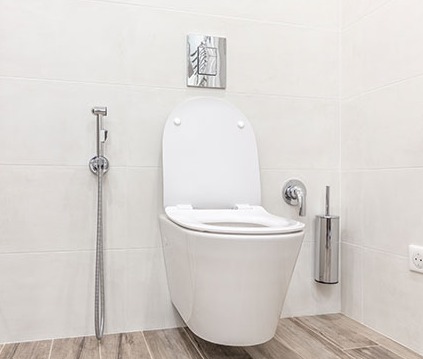 | Toilet ModelsWhen choosing a toilet, you must take into consideration how many pieces the toilet has and how it is mounted in the bathroom.1-piece toilets are typically heavier in weight and have a sleeker design. These types of toilets are easier to clean, faster to install, and can be more compact in size. 2-piece toilets are typically less expensive and allow you to mix and match different tanks and bowls with various heights, styles, and rough-in sizes. These types of toilets allow you to maneuver pieces of the toilet for an easier install. Wall-hung toilets are typically more modern and minimalistic than a 1- or 2- piece toilet. These types of toilets take up no floor space in your bathroom and are smaller in in size. |
Single vs. Dual FlushesSingle flush toilets are the most common type of toilet found in older homes and buildings. They have one flush mechanism which means all types of waste are flushed with the same amount of water.Dual flush toilets have two flush mechanisms that give you the option to flush with more or less gallons of water. They are more environmentally friendly than a single flush toilet and can lead to lower water bills over time. | 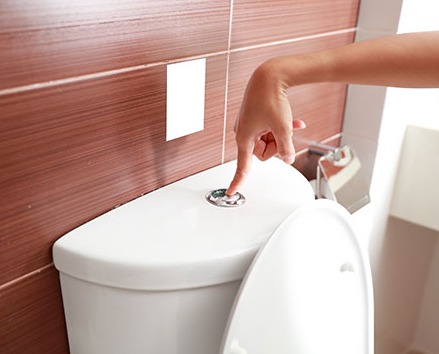 |
The majority of residential toilets are gravity-fed operated, meaning that they rely primarily on the force of gravity to remove the waste. When the toilet handle is pushed, the flush valve inside the toilet tank opens and releases water into the bowl. This fills the trapway (also called the siphon outlet) with water and creates a siphon that pulls the waste out of the bowl, through the trapway. From there, it’s out to your sewer or septic system.
In toilets like these, the trapway fills with water during the flush and initiates a siphon effect that "pulls" material out of the bowl. At the same time, the water entering the bowl from the tank "pushes" material out of the bowl. This simultaneous pushing and pulling evacuates the bowl during flush.
There are also power assisted models where a motor pushes the water into the bowl from the tank and “washdown” models where all water enters through the rim of the bowl.
Measure the Rough-In
A toilet rough-in size is the distance from the finished wall surface to the center of the toilet mounting flange. This is standardized to 12 inches but can also be 10 inches or 14 inches. It is important this number is accurate when choosing a toilet.
Toilet Seats
Open vs. Closed Front
Toilet seats come with either an open or closed front.
Closed front toilet seats are a complete loop and is closed in the front. These seats are typically used in homes and have a lid that keeps young children and pets out of the toilet bowl.
Open front toilet seats have a gap in the front of the seat. Open front seats are primarily used in commercial application and in fact, the Uniform Plumbing Code, section 409.2.2, says that all toilets seats, with the exception of those in private homes, must have open fronts. Also, most commercial application seats will not have a lid (less cover). Open front seats are often less expensive and considered as more sanitary.
Wood vs. Plastic
Toilet seats are typically made of either wood or plastic. However, people looking for cleaning and hygiene as priorities may prefer plastic.
Plastic toilet seats are the most commonly used and tend to be less expensive than wood seats. They are easy to clean and you don't have to worry about it wearing down over time. Some plastic seats are formed with an anti-microbial agent in the plastic. This helps inhibit the growth of odor causing bacteria, mold and mildew and are used in Hospitals and other Institutional places.
Wood toilet seats typically are more durable than plastic seats and tend to be more expensive. Wood seats need to be treated to stop them from absorbing moisture.
Hinge Type
Easy Clean: One of our most popular types of seats is the Easy Clean series. These can be identified on Bemis Seats with an “EC” on the end of the model number. These seats are designed so they can very quickly be removed from the bowl and cleaned. One possible disadvantage to this type of seat is that they may not secure to the bowl as tightly as other types of seats.
Top-Tite Seats: Another version of hinges on a toilet seat is the Top-Tite series from Bemis. These seats cannot be quickly removed for easy cleaning but may form a tighter connection to the bowl. The Top-Tite series can be identified by a “TTT” on the end of a Bemis model number and is designed to never loosen.
Self-Sustaining Hinge: This is a hinge type that holds the seat in an upright position. These can be identified in Bemis seats by an “SSC” in the model number.
Metal Hinges: There are also metal hinges as well that offer design aesthetic
Other Features
Slow Close Seats: One feature a seat may have is a slow close feature. This type of toilet seat will not allow the lid to slam shut. This makes the seat quiet and ideal beside a bedroom or other living areas. Because it doesn’t slam it protects the bowl as well. The slow close also helps avoid the seat falling on a toddler’s fingers. This can be identified by a “SLOW” in Bemis seat model numbers.
Lighted Seats: This type of seat features a light within the toilet bowl that allows you to find the toilet at night, or in the dark. 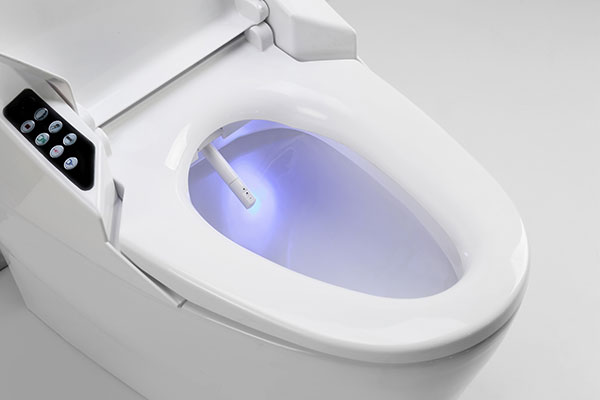
Luxury Toilets
A bidet is a fixture designed for increased hygiene. These fixtures spray water on the user and are intended help wash the user after use. These are more common overseas. If a homeowner doesn’t want to install a completely separate fixture in their home there are seats that act as bidets. The water for these seats is supplied by installing a tee on the supply line before the tank.